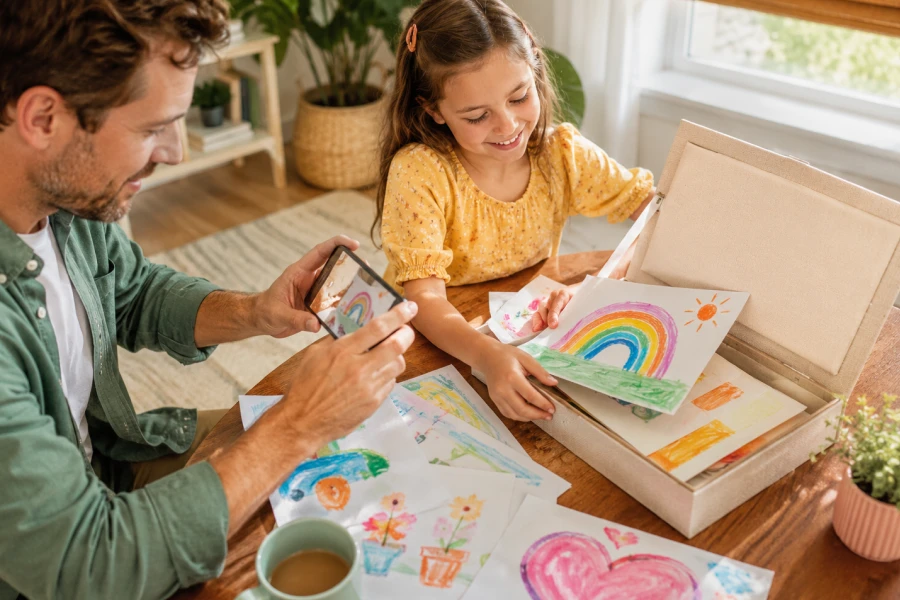
Clutter free art keepsakes help parents save what matters without saving everything. Children create quickly. Paper arrives from school, daycare, parties, and rainy afternoons. The volume can feel endless. Still, every family has pieces worth protecting. A good system makes those favorites easier to find. It also gives children a sense of pride. Parents can honor the art without surrendering every drawer. Memory needs space, but clutter needs boundaries. Thoughtful storage gives both sides a fair place.
Selection turns a pile into a collection. Not every page needs permanent storage. Choose pieces that show personality, milestones, or effort. Keep work that sparks a clear memory. Photograph anything too large or fragile. Let children choose some favorites. Parents can choose others. This balance respects both perspectives. A sentimental storage method helps families avoid guilt. The goal is meaning, not volume.
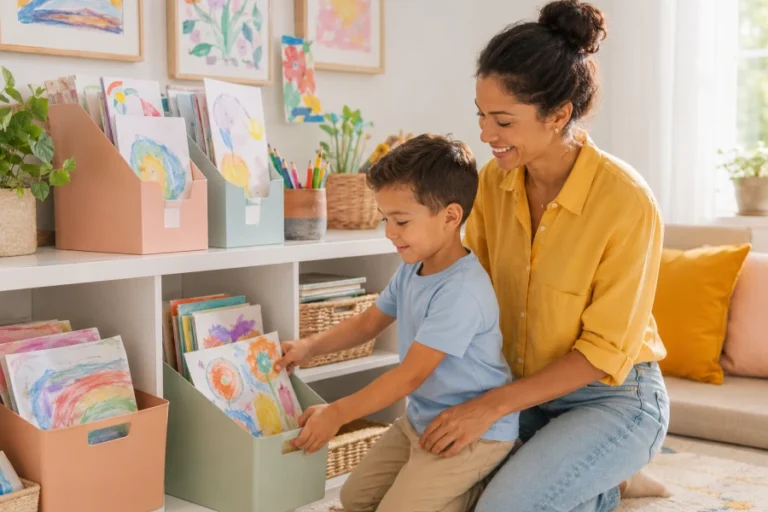
An archive should be easy to maintain. Use one folder per child per year. Add dates when possible. Keep labels short. Store flat pieces together. Place dimensional crafts in a small bin. Photograph bulky projects before recycling them. Review the archive twice a year. Remove duplicates or pieces that no longer feel important. A digital art archive can preserve extra memories without adding paper. Simple archives stay useful longer.
Rotation keeps artwork visible and fresh. Choose a display spot with limited space. Replace older pieces when new favorites arrive. Let children help pick the feature. Celebrate the outgoing piece before storing or photographing it. This ritual makes editing feel respectful. It also keeps walls from becoming crowded. Parents can enjoy creativity without visual overload. A rotation habit turns decision-making into routine. Routines reduce stress because they remove daily debate.
Decision fatigue makes parents keep everything. The pile grows because each choice feels difficult. Rules can help. Keep one favorite per week. Save milestone pieces automatically. Photograph oversized projects the same day. Recycle worksheets that lack emotional value. These guidelines protect mental energy. They also keep storage from becoming sentimental chaos. A tidy memory storage plan makes the next choice easier. Parents gain peace through structure.
Meaningful work deserves breathing room. A crowded box hides beautiful memories. A curated folder invites revisiting. Children enjoy seeing their strongest pieces preserved. Parents can notice growth more clearly. Fewer items often create more emotion. Add a short note when a story matters. Include age, grade, or a funny comment. These details enrich the archive. Years later, context brings the artwork back to life. Space makes memory easier to feel.
Family systems should change as children grow. Preschool art may need large storage. Elementary projects may need folders. Digital storage may become more useful later. Adjust the system without starting over. Keep the rules visible and simple. Involve children as their opinions mature. Let the archive reflect real life. Some seasons produce more art than others. Flexibility keeps the process sustainable. The best keepsake system serves the family, not the other way around.



Leave a comment