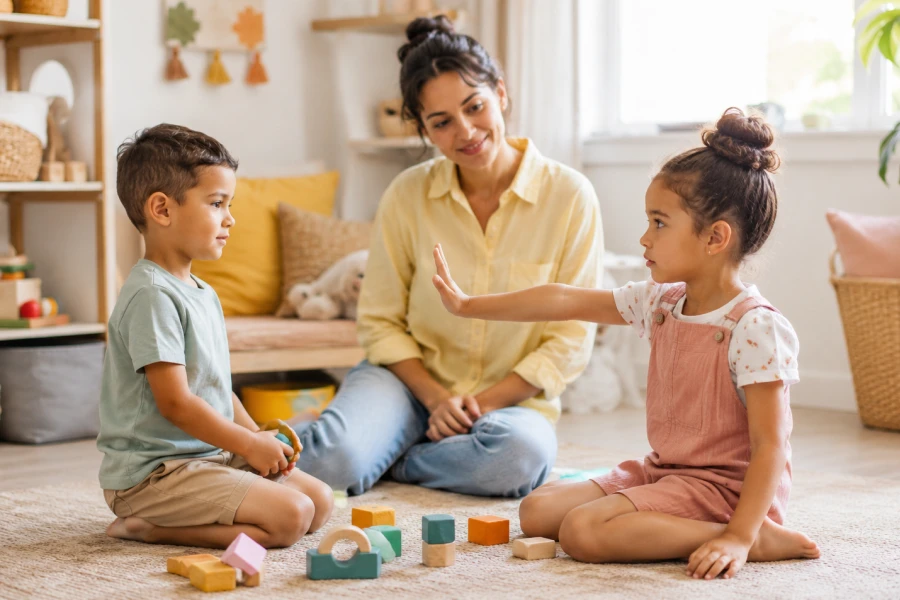
Clear boundaries for kids give children a practical way to protect comfort and respect others. Kindness becomes easier when expectations are visible. Children know what words to use. They understand when to stop. They learn how to ask before acting. Parents often worry that boundaries sound harsh. In reality, clear limits can make relationships warmer. Confusion creates more conflict than honesty. A child who can speak up calmly feels safer. A child who can listen becomes a better friend.
Simple rules work better than long speeches. Ask before touching. Stop when someone says stop. Use words before grabbing. Tell an adult when something feels unsafe. These rules are easy to repeat. They also apply in many settings. Parents can post them visually without making them scary. Practice one rule at a time. A respectful communication habits routine helps children remember what respect looks like. Clarity makes kindness concrete.
Siblings test boundaries constantly. One child enters a room. Another grabs a toy. Someone shouts stop too late. Parents can slow the scene down. Name each person’s limit. Help children repeat the request. Then guide a fair repair. Avoid solving every conflict instantly. Children need practice negotiating. A personal space lessons approach can reduce daily friction. Boundaries make shared homes calmer.
No should not always sound rude. Children need permission to use it respectfully. They also need practice hearing it. Try playful role-play. One child asks for a toy. Another says no, not yet. The first child practices accepting the answer. This exercise builds emotional flexibility. Adults can model the same skill. Say no with warmth when needed. Accept a child’s no when the situation allows. The word becomes safer through balanced use.
School and playdates add social pressure. Children may follow the group against their comfort. They may fear losing friends. Parents can prepare them with short scripts. I do not want to play that. Please give me space. I need help. These phrases are simple enough to remember. Practice them before stressful moments. A social skills for children plan supports confidence outside the home. Preparation makes independence less scary.
Adults sometimes undermine boundary lessons accidentally. They may demand hugs. They may dismiss discomfort. They may call shyness rude. Parents can protect the message kindly. Offer alternatives like waves or high-fives. Explain that the child is practicing respectful choice. Stay calm but consistent. This shows children that their words matter. It also teaches relatives what support looks like. Family culture changes through repeated examples. Boundaries become normal when adults cooperate.
Relationships thrive when people understand limits. Children feel safer with honest friends. Friends feel safer with respectful children. Siblings recover faster after conflict. Classrooms become easier to navigate. Parents see fewer power struggles over personal space. These benefits grow through daily practice. Boundary skills do not develop overnight. They build through repetition, repair, and encouragement. Over time, clear limits make warmth more dependable. Children learn that respect belongs to everyone.



Leave a comment