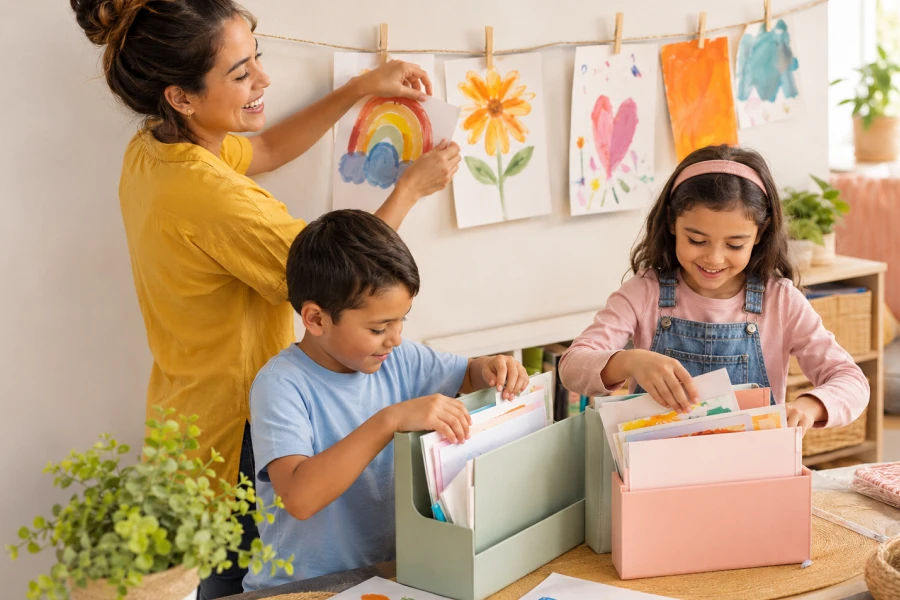
Children artwork organization becomes essential when creativity fills every corner. Parents want to encourage expression. They also want clear tables, drawers, and countertops. Both goals can exist together. A smart system gives art a path through the home. New work arrives. Favorites get displayed. Special pieces enter storage. The rest leaves respectfully. Children learn that creativity has value and boundaries. Parents gain a calmer space without dismissing their child’s imagination.
The entry point matters. Choose one landing place for all artwork. A tray, basket, or folder can work. Avoid spreading papers across multiple rooms. Teach children where new pieces go. Sort the pile on a predictable schedule. This habit keeps decisions contained. It also prevents accidental damage. A children artwork organization routine starts before clutter scatters. One clear destination changes the whole process.
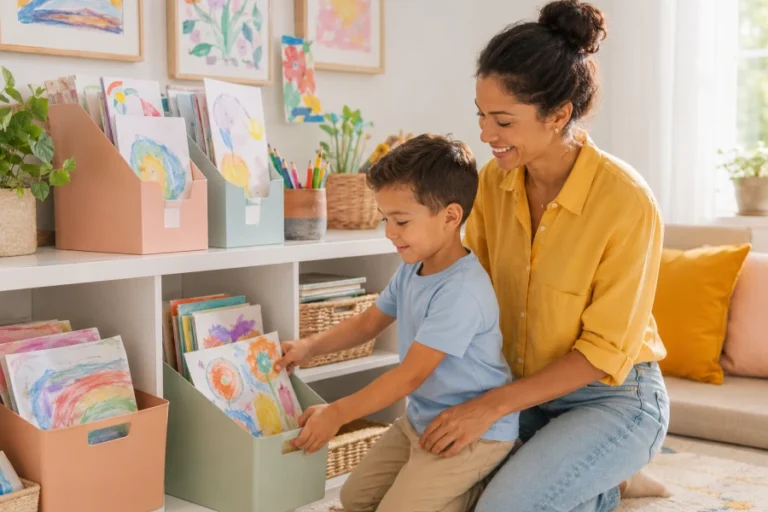
Limits protect the system. Decide how much display space exists. Decide how much storage space exists. When the folder fills, review it. When the wall crowds, rotate pieces. Limits do not insult creativity. They help the best work stand out. Children understand visual boundaries when adults explain them kindly. A family art display system can make those limits feel exciting. Boundaries turn abundance into appreciation.
Sorting can be tender. Children may wonder why some art leaves. Use language that honors effort. Explain that homes cannot hold every page forever. Ask which pieces feel most special. Share why you love certain details. Photograph work before recycling when needed. Avoid sneaky disposal when a child feels attached. Trust grows through honest routines. Parents can set limits while showing respect. That balance makes editing less painful for everyone.
School weeks bring fast paper flow. Projects arrive folded in backpacks. Paintings dry in odd shapes. Worksheets mix with real keepsakes. Parents need quick sorting rules. Place artwork in the landing basket first. Discard obvious scraps immediately. Save favorites for weekly review. Photograph bulky work before it bends or tears. A kids craft organization habit keeps school clutter manageable. Busy weeks need systems that forgive missed days.
Digital backup expands memory without expanding storage. Take photos in natural light. Use a plain background. Capture the whole piece clearly. Organize images by child and year. Add short notes when the story matters. Delete blurry duplicates quickly. Digital albums work best when maintained regularly. They also help share art with relatives. Physical favorites can stay limited because digital memories remain available. This balance keeps homes lighter.
A family ritual makes organization warmer. Review artwork together each month. Let children retell the stories. Choose one piece to display. Pick one piece to store. Photograph a few more. Recycle the rest with gratitude. This process teaches reflection. It also builds confidence. Children see their work valued thoughtfully. Parents see clutter transform into memory. Over time, the system becomes part of family life.



Leave a comment